
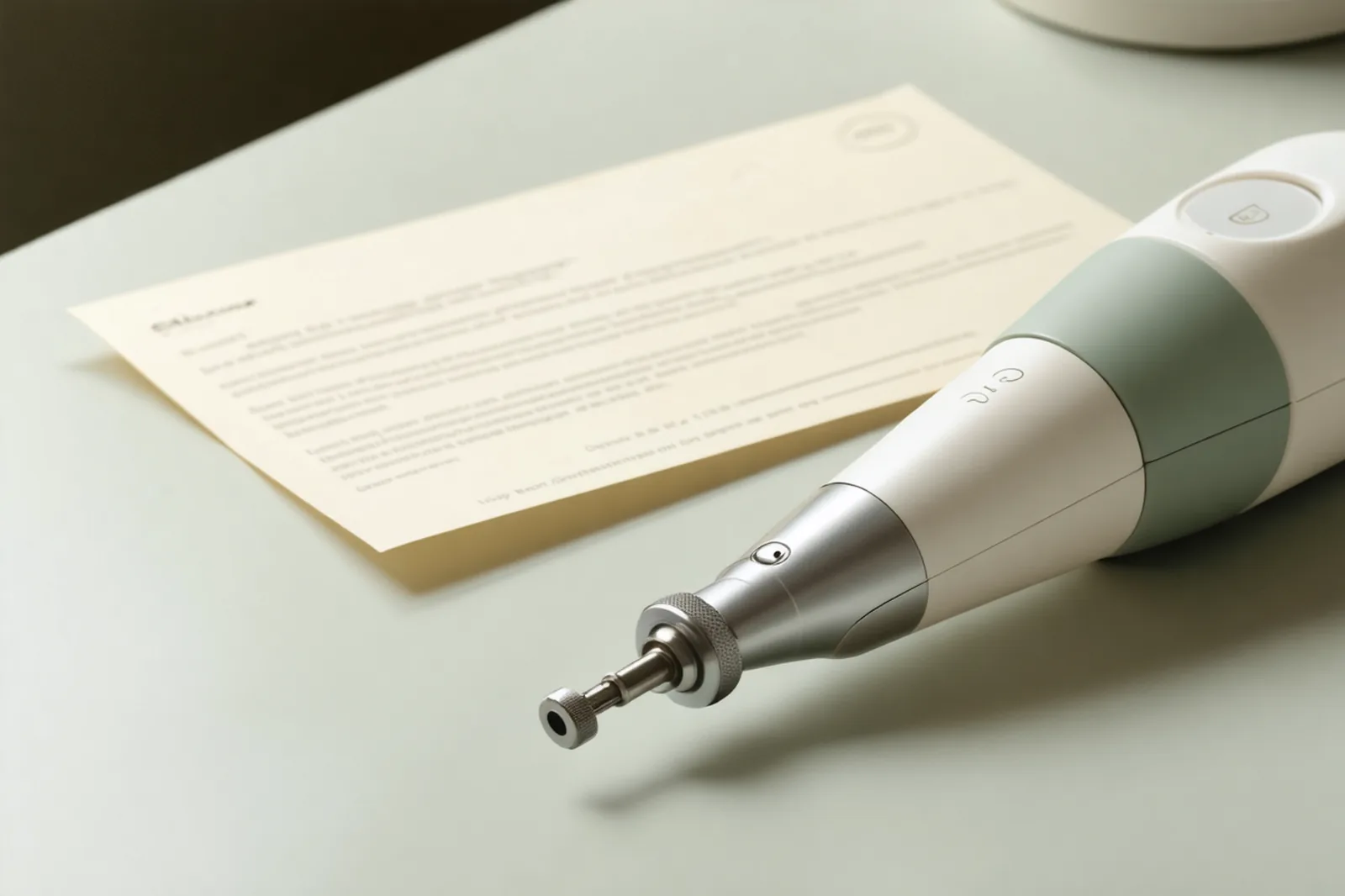
Ellacor is Candela's fractional ablative device that uses radiofrequency (RF) energy to create precise, millimeter-scale columns of tissue removal—a mechanism called micro-coring. Unlike traditional fractional CO₂ or erbium lasers that vaporize tissue across a treatment zone, Ellacor uses RF-heated electrodes to core out discrete cylindrical volumes of skin, leaving untreated islands of epidermis and dermis between ablated columns. This fractional pattern accelerates re-epithelialization while delivering ablative depth and precision.
Devices & Tech
Ellacor: How Candela's Micro-Coring Technology Works and What FDA Approval Means for Your Practice
Ellacor is Candela's fractional skin-removal device using radiofrequency-powered micro-coring to ablate tissue columns. Here's what you need to know about mechanism, clearance, and clinical positioning.
Free alerts
Free: recall & rule-change alerts for your practice.
Get the recalls and state-law changes that hit your treatment room, in your inbox — free. Unsubscribe in one click.
Free · weekly · unsubscribe anytime. Privacy.
Ellacor received FDA 510(k) clearance in 2022 for skin resurfacing and benign lesion removal, positioning it as a fractional ablative alternative to CO₂ and erbium lasers with potentially broader skin-tone applicability.
Ellacor's handpiece contains an array of small RF electrodes that penetrate the skin to a set depth (typically 0.5–1.5 mm, depending on settings and indication) and deliver radiofrequency energy to heat and ablate tissue in a columnar pattern. The device removes the coagulated tissue mechanically, creating visible "cores" of ablated skin. The spacing and density of these cores are operator-adjustable, allowing customization of fractional coverage (typically 10–40%) and treatment intensity. Because RF energy heats tissue rather than relying on photon absorption, the mechanism is less dependent on melanin or hemoglobin, theoretically offering broader skin-tone applicability than laser-based fractional systems.
FDA Status and Clearance
Ellacor received 510(k) clearance from the FDA in 2022 for skin resurfacing and removal of benign skin lesions (including actinic keratosis, seborrheic keratosis, and other superficial growths). The clearance was based on substantial equivalence to existing ablative and fractional devices. It is not cleared for deeper dermatological conditions or off-label uses; practitioners must operate within the cleared indications and follow manufacturer guidelines on depth, power, and patient selection. Verify current cleared indications with Candela or the FDA database, as labeling can be updated.
Clinical Positioning and Competitive Landscape
Ellacor occupies a middle ground between non-ablative fractional RF (like Morpheus8 or Secret RF) and fully ablative fractional lasers (CO₂, erbium). It delivers ablative results with fractional healing—faster recovery than full-field ablation but more dramatic results than microneedling RF. The micro-coring mechanism appeals to practices seeking a differentiated modality that can address fine lines, texture, actinic damage, and benign lesions in a single pass, with downtime typically 3–7 days depending on treatment density.
Candela positions Ellacor as a resurfacing tool for aesthetic and therapeutic indications, competing directly with fractional CO₂ and erbium systems on efficacy while claiming advantages in skin-tone versatility and precise tissue removal. Practices already invested in Candela's broader platform (GentleMax Pro, GentleLase) may find integration and training straightforward.
Practice Economics and Adoption
Ellacor requires capital investment (device acquisition cost varies; consult Candela for current pricing) and ongoing consumables (handpiece tips and electrodes). Treatment pricing typically ranges from $800–$2,500 per session depending on area treated and treatment density, positioning it competitively with fractional CO₂ and erbium systems. Like all ablative modalities, patient selection and realistic expectation-setting are critical—downtime, post-inflammatory hyperpigmentation risk (especially in darker skin tones, despite RF's theoretical advantage), and the need for sun protection drive patient compliance and satisfaction.
Ellacor remains a niche offering in the U.S. market relative to established fractional CO₂ and laser platforms, but practices seeking a differentiated, RF-based ablative option with lower melanin-dependency may find it clinically and commercially viable.
Frequently asked questions
What is Ellacor micro-coring and how does it differ from fractional CO₂ laser?
Ellacor uses radiofrequency-heated electrodes to create precise cylindrical columns of tissue removal, leaving untreated skin islands between ablated zones. Unlike fractional CO₂ lasers that vaporize tissue across a treatment zone, Ellacor's RF-based mechanism is less dependent on melanin or hemoglobin, theoretically offering broader skin-tone applicability while delivering ablative depth with fractional healing patterns.
Is Ellacor FDA approved and what can it legally treat?
Ellacor received 510(k) FDA clearance in 2022 for skin resurfacing and removal of benign skin lesions, including actinic keratosis and seborrheic keratosis. Practitioners must operate within these cleared indications and follow manufacturer guidelines on depth, power, and patient selection; off-label use is not permitted under clearance.
How much downtime should patients expect after Ellacor treatment?
Typical downtime ranges from 3–7 days depending on treatment density and fractional coverage settings. Because Ellacor leaves untreated islands of skin between ablated columns, re-epithelialization is faster than full-field ablation, though more dramatic than non-ablative fractional RF treatments.
What does Ellacor treatment cost and how does it compare to other resurfacing devices?
Treatment pricing typically ranges from $800–$2,500 per session depending on area treated and treatment density, positioning it competitively with fractional CO₂ and erbium systems. Device acquisition cost and ongoing consumables (handpiece tips and electrodes) require capital investment; consult Candela for current pricing.
Can Ellacor be used safely on darker skin tones?
Ellacor's RF-based mechanism is theoretically less dependent on melanin than laser systems, offering broader skin-tone applicability. However, post-inflammatory hyperpigmentation risk still exists in darker skin tones, so careful patient selection and realistic expectation-setting remain critical regardless of the device's theoretical advantages.
What is the fractional coverage percentage on Ellacor and can it be adjusted?
Ellacor's fractional coverage typically ranges from 10–40%, with spacing and density of ablated cores being operator-adjustable. This customization allows practitioners to tailor treatment intensity and recovery time based on patient goals and skin condition.
Stay three moves ahead of every practice in your market.
Knowing it happened is table stakes. Inside MedSpa Pro hands you the play — what each move means for your margins, your license, and your patients, and exactly what to do about it — in a two-minute brief, twice a week. The owners who read it never get blindsided.
Get the edge · $20/moJoin the owners who run ahead of the industry. Cancel anytime, one click.