
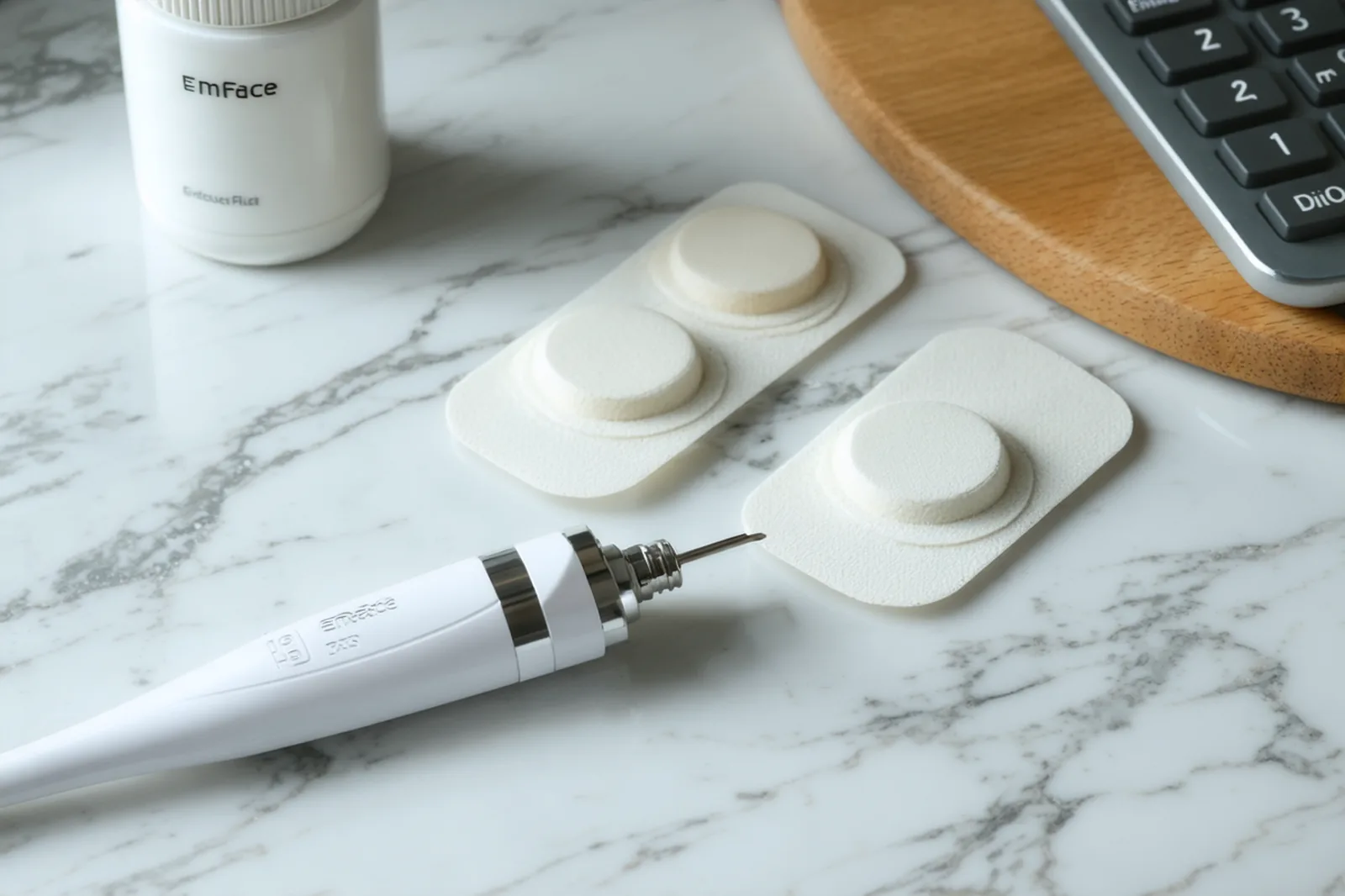
Emface is BTL's needle-free facial lifting and tightening device that combines two simultaneous energy modalities: high-intensity focused electromagnetic stimulation (HIFES) and synchronized radiofrequency (RF). The HIFES component stimulates the underlying facial musculature—primarily the masseter and frontalis—causing sustained muscle contraction and hypertrophy, while the RF heats the dermis and superficial subcutaneous tissue to trigger collagen remodeling and skin tightening. The two energies are delivered in real-time synchronization through a handheld applicator, with treatment cycles typically lasting 20 minutes per session.
Devices & Tech
Emface: How BTL's Needle-Free HIFES + RF Lift Works and What It Means for Your Practice
Emface combines synchronized high-intensity focused electromagnetic stimulation and radiofrequency to lift and tighten skin without needles. Here's what practice owners need to know about technology, indications, patient economics, and ROI.
Free alerts
Free: recall & rule-change alerts for your practice.
Get the recalls and state-law changes that hit your treatment room, in your inbox — free. Unsubscribe in one click.
Free · weekly · unsubscribe anytime. Privacy.
Emface combines HIFES muscle stimulation with synchronized RF heating—no needles, no downtime, and break-even at 8–12 treatments per month on a $2,000–$3,500 monthly lease.
HIFES differs fundamentally from conventional electromagnetic technologies like Emsculpt. Rather than inducing rapid supramaximal muscle contractions (which Emsculpt does via high-frequency pulses), HIFES delivers focused electromagnetic energy that causes sustained, isometric muscle contraction and growth over the treatment window. This mechanism is designed to create structural lift by increasing muscle mass and tone in the face—a departure from purely thermal or volumetric approaches.
The RF component operates at approximately 40 MHz and heats tissue to 40–45°C, inducing immediate collagen contraction and longer-term collagen synthesis. The synchronization is the key innovation: RF heating primes tissue compliance, allowing deeper and more efficient HIFES penetration, while muscle contraction from HIFES improves RF energy distribution and tissue contact.
Clinical Indications and Patient Selection
Emface is FDA-cleared for non-invasive skin tightening and lifting of the face and neck. The typical candidate is a patient seeking mild-to-moderate skin laxity, loss of facial definition, or descent of soft tissue—essentially the "pre-surgical" or "surgical-alternative" demographic. Patients often report interest in jawline definition, cheek lift, and brow elevation without downtime or needles.
Results are progressive and cumulative. Most treatment protocols call for 4 sessions spaced 2 weeks apart, with maintenance sessions recommended every 6–12 months. Patients typically see initial tightening within 2–4 weeks and continued improvement over 12 weeks as collagen remodeling progresses.
Practice Economics and ROI
Emface devices are typically leased rather than purchased outright. Lease costs range from approximately $2,000–$3,500 per month depending on terms and geography, with some providers reporting break-even at 8–12 treatments per month. A standard treatment protocol (4 sessions) is priced between $3,000–$5,000 per patient in most U.S. markets, with individual sessions ranging $800–$1,500.
The unit economics are attractive for practices with existing patient volume: the device requires minimal consumables (no injectables, no tips, no cartridges), and treatment time is predictable and efficient. A single provider can deliver 6–8 treatments per day. The lack of downtime and needle-free positioning make it a strong add-on to existing injectables and laser practices, particularly for patients hesitant about fillers or toxin.
Reimbursement is cash-pay only; there is no CPT code or insurance coverage. Patient financing (CareCredit, Klarna, etc.) is standard in the market.
Competitive Positioning
Emface occupies a distinct niche: it's neither a filler nor a neuromodulator, and it's not a fractional laser or microneedling device. It competes indirectly with radiofrequency microneedling (Morpheus8, Secret RF), thread lifts, and light-to-moderate filler protocols. The needle-free and toxin-free positioning resonates with patients seeking "natural" results and those with needle anxiety. However, it does not replace surgical lifting or address significant volume loss—those patients still require fillers, fat transfer, or surgery.
Key Considerations for Owners
Verify current FDA clearance status and any post-market surveillance data with BTL directly, as device indications and data evolve. Emface requires provider training and credentialing; BTL typically provides this at purchase or lease initiation. Patient expectations must be set carefully: this is a tightening and lifting device, not a volumizer, and results are subtle compared to fillers or threads.
The device works best in a practice with strong patient education, existing aesthetic demand, and the ability to bundle it with complementary treatments. Standalone Emface practices are uncommon; it thrives as part of a comprehensive aesthetic menu.
Frequently asked questions
How much does Emface cost per treatment and what's the full protocol price?
Individual Emface sessions range from $800–$1,500, with a standard 4-session protocol priced between $3,000–$5,000 per patient in most U.S. markets. Most practices recommend 4 sessions spaced 2 weeks apart, followed by maintenance sessions every 6–12 months.
What's the difference between Emface HIFES and Emsculpt electromagnetic technology?
Emface uses HIFES (high-intensity focused electromagnetic stimulation) to create sustained, isometric muscle contractions and growth, while Emsculpt induces rapid supramaximal contractions via high-frequency pulses. Emface's HIFES is synchronized with RF energy for simultaneous skin tightening, whereas Emsculpt focuses primarily on muscle building without the radiofrequency component.
How many Emface treatments can one provider do per day and what's the break-even point?
A single provider can deliver 6–8 Emface treatments per day, with each session lasting 20 minutes. Most practices report break-even at 8–12 treatments per month, with monthly lease costs ranging from $2,000–$3,500 depending on terms and geography.
When will patients see results from Emface and how long do they last?
Patients typically see initial tightening within 2–4 weeks, with continued improvement over 12 weeks as collagen remodeling progresses. Results are cumulative across the 4-session protocol, and maintenance sessions are recommended every 6–12 months to sustain the lift and tightening effects.
Does insurance cover Emface treatments?
No, Emface is cash-pay only with no CPT code or insurance coverage. Most practices offer patient financing options like CareCredit or Klarna to make the treatment more accessible.
What facial areas does Emface treat and who is the ideal candidate?
Emface is FDA-cleared for non-invasive skin tightening and lifting of the face and neck, with particular effectiveness for jawline definition, cheek lift, and brow elevation. The ideal candidate has mild-to-moderate skin laxity or soft tissue descent and is seeking a needle-free, non-invasive alternative to surgery or fillers.
Stay three moves ahead of every practice in your market.
Knowing it happened is table stakes. Inside MedSpa Pro hands you the play — what each move means for your margins, your license, and your patients, and exactly what to do about it — in a two-minute brief, twice a week. The owners who read it never get blindsided.
Get the edge · $20/moJoin the owners who run ahead of the industry. Cancel anytime, one click.