
Yes, Evolysse is FDA-approved. Evolus launched its hyaluronic acid filler line in 2023 as a direct competitor to the Juvéderm and Restylane portfolios, with the product family now including multiple viscosity grades for different anatomical applications and depth of injection.
Injectables
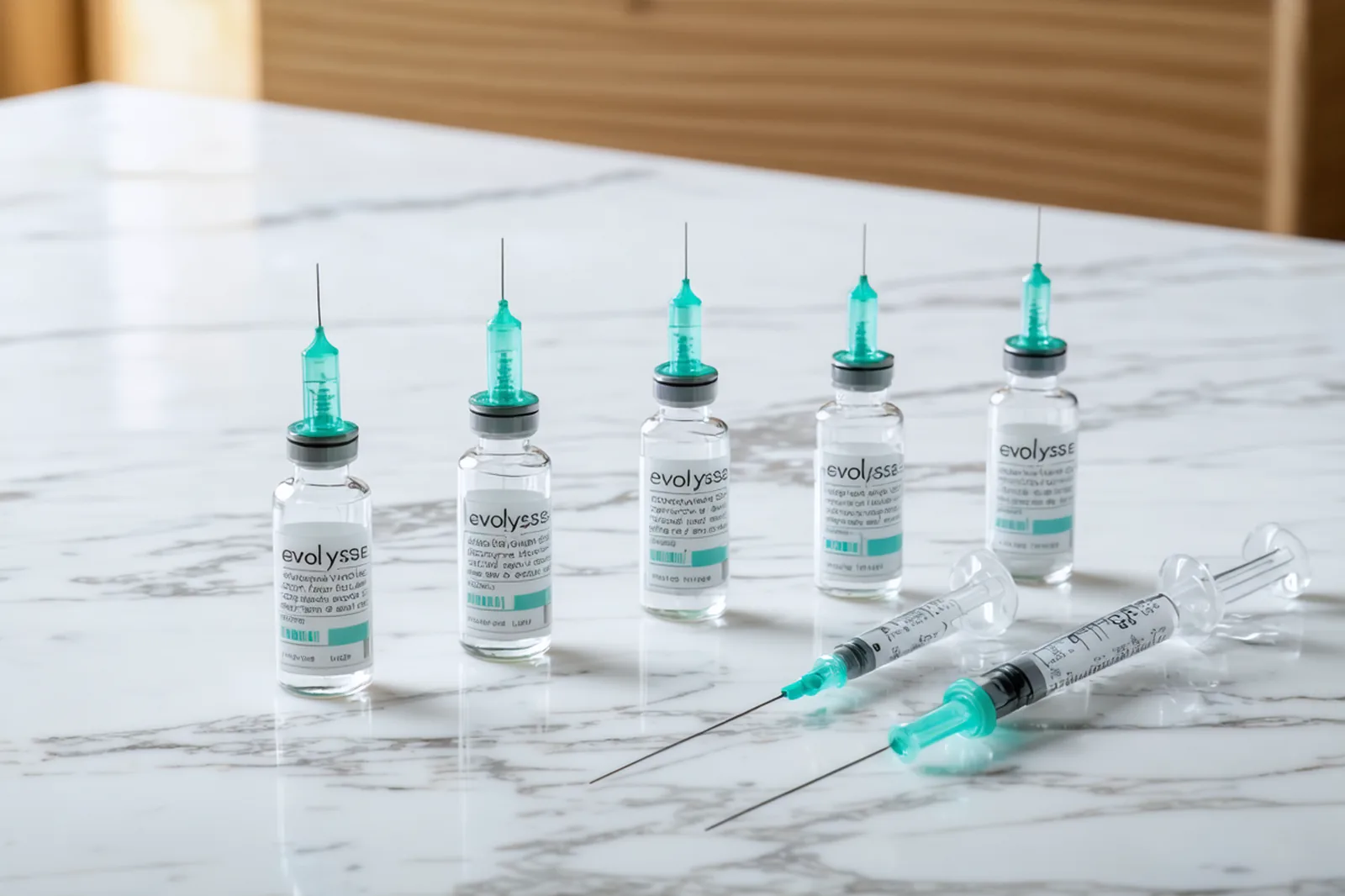
Is Evolysse FDA Approved? Evolus's HA Filler Line Explained
Evolysse is FDA-approved and represents Evolus's entry into the hyaluronic acid filler market—here's how it compares to Juvéderm and Restylane.
1-YEAR MOVE
EOLS
▼15.6%
ABBV
▲11.6%
| Ticker | Company | 1-year change |
|---|---|---|
| EOLS | Evolus | −15.6% |
| ABBV | AbbVie (Allergan Aesthetics) | +11.6% |
Free alerts
Free: recall & rule-change alerts for your practice.
Get the recalls and state-law changes that hit your treatment room, in your inbox — free. Unsubscribe in one click.
Free · weekly · unsubscribe anytime. Privacy.
Evolysse is FDA-approved and typically 15–25% cheaper per syringe than Juvéderm or Restylane, but has captured only 3–5% market share due to incumbent loyalty and patient brand preference.
Evolysse received 510(k) clearance from the FDA, the same regulatory pathway used by Allergan Aesthetics (Juvéderm) and Galderma (Restylane). The product is manufactured using Evolus's proprietary cross-linking technology and is marketed as a non-animal-derived hyaluronic acid filler. Evolus positioned the launch as a competitive alternative to the two market leaders, with particular emphasis on pricing and rebate-program flexibility for practices.
Product Line and Formulation
The Evolysse line includes multiple products targeting different tissue planes and correction needs:
- Evolysse (standard formulation) — designed for mid-to-deep dermal injection, suitable for nasolabial folds, marionette lines, and cheek augmentation
- Evolysse Lips — optimized for lip augmentation and perioral work with a softer, more moldable consistency
- Evolysse Ultra — a denser formulation for deeper placement and greater projection, comparable to Juvéderm Ultra or Restylane Lyft
Each product is supplied in pre-filled 0.55 mL syringes, consistent with industry standard packaging. Cross-linking density and hyaluronic acid concentration are engineered to provide predictable longevity (typically 9–12 months in clinical practice, though individual metabolism varies).
How Evolysse Compares to Juvéderm and Restylane
Market Position: Evolysse entered a mature, duopoly-dominated market. Juvéderm (AbbVie/Allergan Aesthetics) and Restylane (Galderma) together control roughly 85–90% of the HA filler market share in the U.S. Evolysse's competitive advantage rests on three pillars: lower per-syringe acquisition cost, more aggressive rebate structures through the Evolus Rewards program, and freedom from exclusive loyalty contracts that some practices negotiate with larger manufacturers.
Clinical Performance: All three lines use cross-linked hyaluronic acid and deliver similar clinical outcomes when dosed appropriately. Juvéderm products tend toward a slightly smoother, more cohesive gel; Restylane formulations are often described as slightly firmer and more "sculptable." Evolysse occupies a middle ground. Longevity and diffusion profiles are comparable across the three brands when matched for indication and depth.
Economics: Evolysse's per-syringe cost is typically 15–25% lower than Juvéderm or Restylane at list price, making it attractive for practices seeking margin improvement or volume-based pricing flexibility. However, many established practices benefit from manufacturer rebate programs (Alle for Allergan, Aspire for Galderma) that can narrow the net cost gap. Evolus Rewards offers competitive rebate tiers, but practices must evaluate total cost-of-goods against their patient volume and mix.
Adoption Barriers: Despite FDA approval and clinical equivalence, Evolysse has captured only 3–5% of the HA filler market as of 2024. Reasons include strong incumbent relationships, established patient brand loyalty to Juvéderm and Restylane, and the fact that many practices have existing inventory commitments or exclusive supply agreements. Switching requires staff retraining, patient communication, and willingness to absorb existing stock.
Practical Considerations for Practice Owners
If you're evaluating Evolysse, verify current pricing with your Evolus representative and model the per-unit economics against your rebate tier with Allergan or Galderma. Evolysse is a legitimate, FDA-cleared product with solid clinical data, but the decision to stock it hinges on margin opportunity and whether you have inventory flexibility. Many practices use it as a secondary line to reduce per-syringe cost on high-volume patients or to negotiate better terms with incumbents.
Ensure your team receives proper training on injection technique and patient counseling, as switching between HA fillers mid-treatment can create continuity issues if patients perceive different results or longevity.
Frequently asked questions
Is Evolysse FDA approved?
Yes, Evolysse is FDA-approved via 510(k) clearance, the same regulatory pathway used by Juvéderm and Restylane. Evolus launched the hyaluronic acid filler line in 2023 using proprietary cross-linking technology and non-animal-derived HA formulation.
How much does Evolysse cost compared to Juvéderm and Restylane?
Evolysse is typically 15–25% less expensive per syringe at list price than Juvéderm or Restylane. However, established practices using manufacturer rebate programs (Alle, Aspire, or Evolus Rewards) may see the net cost gap narrow significantly depending on volume and rebate tier.
How long does Evolysse last?
Evolysse typically lasts 9–12 months in clinical practice, though individual metabolism varies. Longevity and diffusion profiles are comparable to Juvéderm and Restylane when matched for indication and injection depth.
What are the different types of Evolysse fillers?
The Evolysse line includes three formulations: standard Evolysse for mid-to-deep dermal injection (nasolabial folds, marionette lines, cheeks), Evolysse Lips for lip augmentation with a softer consistency, and Evolysse Ultra for deeper placement and greater projection. All come in pre-filled 0.55 mL syringes.
Why haven't more practices switched to Evolysse if it's cheaper?
Evolysse holds only 3–5% market share as of 2024 despite FDA approval and clinical equivalence, primarily due to strong incumbent relationships, established patient brand loyalty to Juvéderm and Restylane, and existing inventory or exclusive supply agreements that make switching costly.
How does Evolysse compare clinically to Juvéderm and Restylane?
All three use cross-linked hyaluronic acid with similar clinical outcomes when dosed appropriately. Juvéderm tends toward a smoother, more cohesive gel; Restylane is slightly firmer and more sculptable; Evolysse occupies a middle ground with comparable longevity and diffusion profiles.
Stay three moves ahead of every practice in your market.
Knowing it happened is table stakes. Inside MedSpa Pro hands you the play — what each move means for your margins, your license, and your patients, and exactly what to do about it — in a two-minute brief, twice a week. The owners who read it never get blindsided.
Get the edge · $20/moJoin the owners who run ahead of the industry. Cancel anytime, one click.