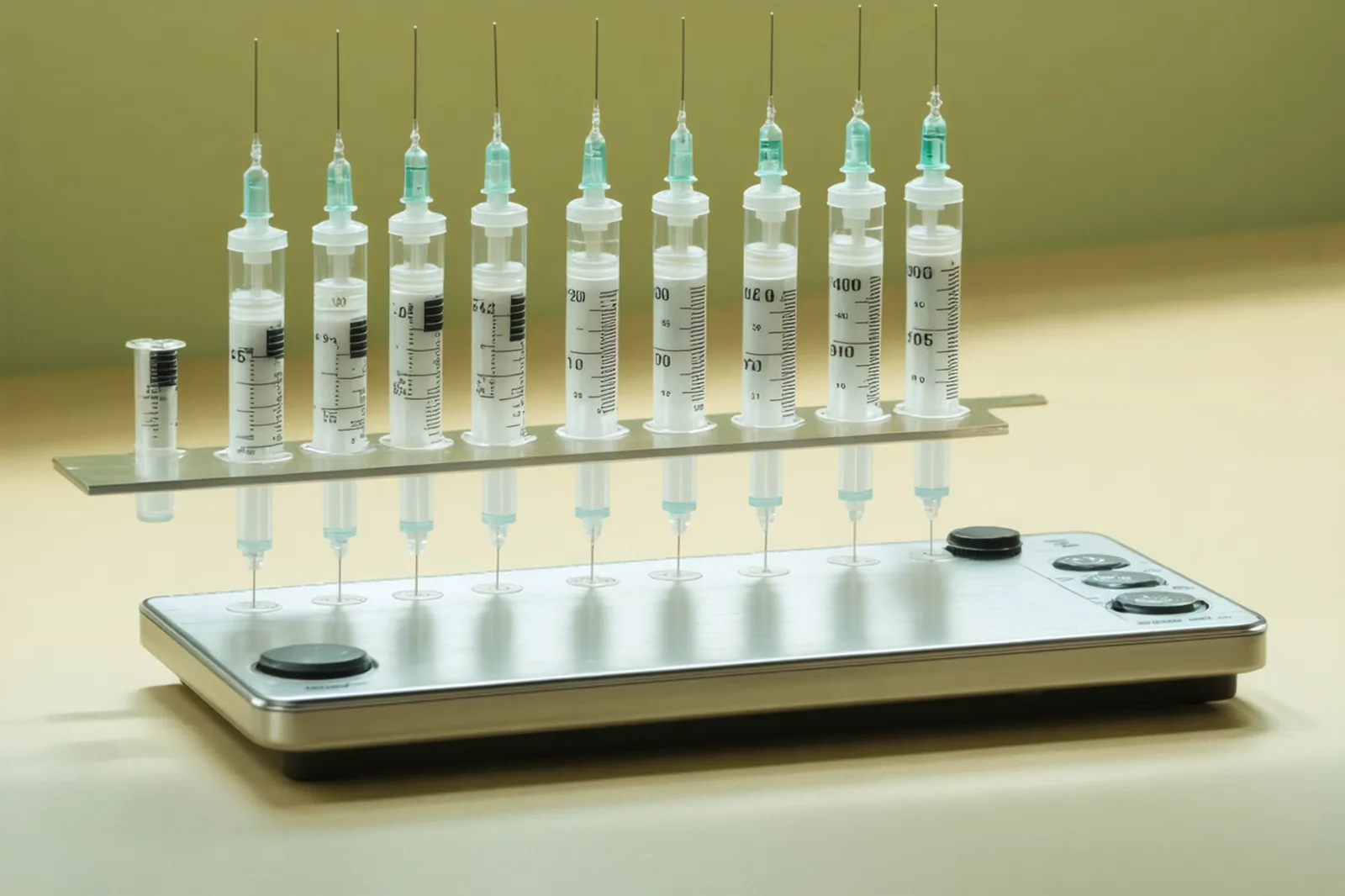
What a Liquid Facelift Includes
The core components are:
- Neuromodulator (typically Botox, Dysport, or Xeomin) in the upper face—glabella, frontalis, lateral orbicularis oculi
- Dermal filler (HA, PLLA, or CaHA) in the midface and lower face—cheeks, temples, tear troughs, nasolabial folds, marionette lines, jawline, lips
- Optional adjuncts: microneedling with radiofrequency, laser resurfacing, or chemical peels to address skin quality and texture
The specific filler choice drives both clinical outcome and economics. Hyaluronic acid (Restylane, Juvéderm, Belotero) offers immediate results and reversibility but requires 6–9 month maintenance. Calcium hydroxyapatite (Radiesse) lasts 12–18 months and stimulates collagen. Poly-L-lactic acid (Sculptra) is a true biostimulator requiring 3–4 sessions over months but delivering 2+ years of results and commanding premium pricing.
Sequencing and Clinical Approach
Most practices inject toxin first, then filler 7–14 days later. This allows the neuromodulator to take effect (peak at 10–14 days) before assessing how much filler volume is needed. Some practices do both in a single session; this works clinically but reduces the opportunity for a follow-up appointment and second revenue event.
The midface is the anchor: restoring cheek volume with 1–2 syringes of filler lifts the entire lower face and softens nasolabial folds without overfilling them. Tear-trough filler (0.5–1 syringe) opens the eye and reduces shadowing. Jawline definition with filler or strategic toxin placement in the masseter creates a subtle lift effect.
Pricing Structure
Practices typically price a liquid facelift as a package rather than itemizing each component. This approach:
- Simplifies patient decision-making
- Increases perceived value
- Protects margin if product costs vary
Typical package pricing:
- Entry-level: $1,200–$1,800 (1 vial toxin + 1–1.5 syringes filler)
- Mid-tier: $2,000–$2,800 (1 vial toxin + 2–3 syringes filler)
- Premium: $3,200–$4,500 (1–2 vials toxin + 3–4 syringes filler, often with biostimulator or advanced filler)
These prices assume a metropolitan market with established demand. Rural or secondary markets may run 20–30% lower. Practices using loyalty programs (Alle, Aspire, Evolus Rewards) can offer package discounts of 10–15% to drive volume and capture patient data.
Cost of goods for a mid-tier package:
- Botox (1 vial, ~$10–$12 per unit at volume): ~$100–$120
- Juvéderm Ultra Plus (2 syringes at ~$60–$75 per syringe): ~$120–$150
- Total COGS: ~$220–$270
- Gross margin: 65–75%
Practices using Radiesse or Sculptra see higher COGS ($90–$130 per syringe) but can justify higher package pricing ($3,500–$5,000) and command stronger margins because these products deliver longer-lasting results and higher perceived value.
Presentation and Patient Education
Position the liquid facelift as a "preventive and corrective" treatment, not a one-time fix. Frame it as:
- A starting point for patients new to injectables
- A maintenance strategy for existing patients (annual or semi-annual refreshes)
- A bridge to more advanced treatments (threads, energy devices, or surgical options) for patients with significant ptosis or excess skin
Use before-and-after galleries organized by age and concern, not just by product. Show the difference between toxin alone, filler alone, and the combination. This educates patients on why both are necessary and justifies the package price.
Offer a "liquid facelift consultation" as a separate, often complimentary appointment. This extends the sales cycle, allows detailed assessment, and gives patients time to commit psychologically and financially. Many practices bundle a consultation with a first-time discount (10–15% off the package).
Maintenance and Lifetime Value
A liquid facelift patient typically returns every 3–4 months for toxin touch-ups and every 6–12 months for filler, depending on the product used. This creates predictable recurring revenue. A patient spending $2,500 on an initial liquid facelift and returning quarterly for maintenance ($400–$600 per visit) generates $2,500–$3,500 annually—one of the highest lifetime values in aesthetic practice.
Track these patients in your CRM with automated recall. Practices that systematize liquid facelift follow-ups see 60–70% retention rates, compared to 30–40% for one-off treatments.
The liquid facelift is not a clinical innovation—it's a business model that bundles proven products into a high-margin, repeatable service. Practices that present it clearly, price it confidently, and systematize the follow-up capture disproportionate share of the aesthetic market.
Frequently asked questions
How much does a liquid facelift cost?
Liquid facelift pricing ranges from $1,200–$1,800 for entry-level packages (1 vial toxin + 1–1.5 syringes filler) to $3,200–$4,500 for premium packages with biostimulators or advanced fillers. Mid-tier packages typically run $2,000–$2,800 and include 1 vial toxin plus 2–3 syringes of filler. Prices vary 20–30% lower in rural markets.
What's the difference between a liquid facelift and regular Botox or filler?
A liquid facelift combines neuromodulators (Botox, Dysport, Xeomin) with dermal fillers to address both dynamic wrinkles and volume loss in a single treatment plan. Botox alone only relaxes muscles; filler alone only restores volume. Together, they mimic a surgical lift without incisions or downtime.
Should you inject Botox and filler on the same day?
Most practices inject toxin first, then filler 7–14 days later to allow the neuromodulator to peak (at 10–14 days) before assessing filler volume needs. While same-day injection works clinically, spacing them creates a second appointment and revenue opportunity.
How long does a liquid facelift last?
Results depend on filler type: hyaluronic acid (Restylane, Juvéderm) lasts 6–9 months, calcium hydroxyapatite (Radiesse) lasts 12–18 months, and poly-L-lactic acid (Sculptra) lasts 2+ years. Botox results peak at 10–14 days and last 3–4 months, requiring ongoing maintenance.
What's the profit margin on a liquid facelift?
A mid-tier liquid facelift package ($2,000–$2,800) has a cost of goods around $220–$270 (1 vial Botox + 2 syringes Juvéderm), delivering a gross margin of 65–75%. Using biostimulators like Sculptra increases COGS but supports premium pricing.
What areas does a liquid facelift treat?
Neuromodulator targets dynamic lines in the upper face (forehead, glabella, crow's feet), while filler restores volume in the midface and lower face—cheeks, temples, tear troughs, nasolabial folds, marionette lines, jawline, and lips. The midface is the anchor point for lifting the entire lower face.