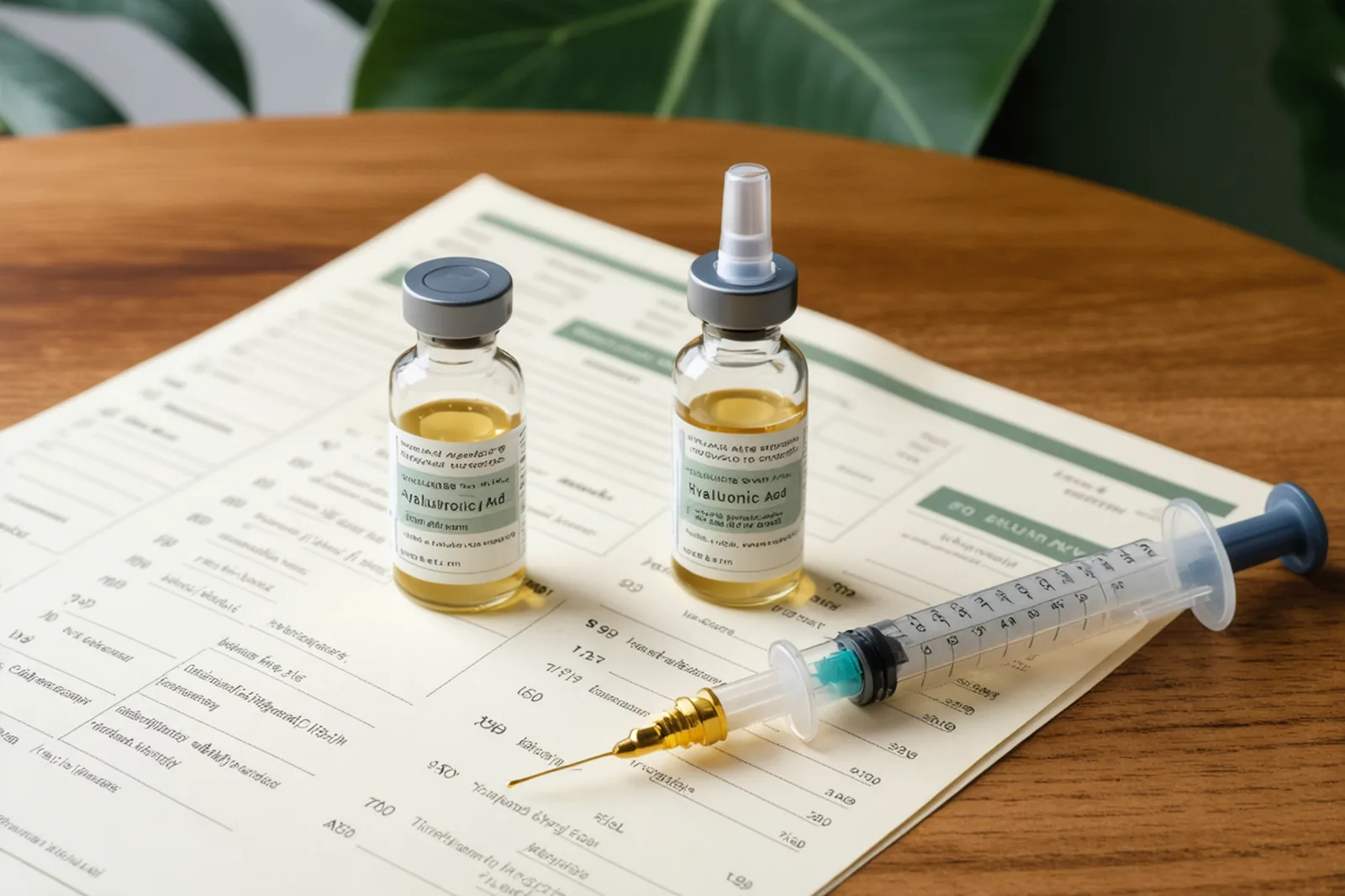
The clinical endpoint is improved skin luminosity, elasticity, fine-line softening, and overall radiance. Patients typically see results over 2–4 weeks and require repeat treatments every 6–12 months, creating a recurring revenue stream that complements core toxin and filler business.
The Major Players and Their Positioning
Skinvive by Juvéderm (Allergan Aesthetics) is the newest entrant and the only skin booster with FDA clearance in the United States. Launched in 2023, Skinvive is a smooth, low-viscosity HA filler specifically formulated for superficial intradermal injection. It received 510(k) clearance as a dermal filler (same regulatory class as traditional Juvéderm), not as a distinct "skin booster" category. One syringe typically treats the face; the standard protocol is 0.5 mL injected intradermally in a fanning or grid pattern. Allergan positions it as a cheek-focused treatment but off-label use across the face is common.
Profhilo (IBSA) is a hybrid HA product—32 mg/mL of stabilized HA in a 2 mL vial—that has gained significant traction in Europe, Asia, and Australia but is not FDA-cleared in the US. It operates in the gray zone of medical tourism and direct-to-consumer import; some US practices source it through international suppliers or compounders, though this carries regulatory risk. Profhilo's mechanism relies on a unique crosslinking technology (Hybrid Cooperative Complex) designed to spread laterally in the dermis and trigger hydration and fibroblast stimulation. The protocol is typically 5 injections per cheek (10 total) using a 27G needle, placed at the dermal–subcutaneous junction.
Rejuran (Corestem, South Korea) is a polynucleotide-based skin booster derived from salmon DNA. It is not FDA-cleared and not legally marketed in the US through any manufacturer. Like Profhilo, it exists in the medical-tourism and gray-market space. Rejuran's mechanism is distinct: polynucleotides are believed to stimulate fibroblasts and improve skin barrier function, with a different clinical profile than HA-based boosters. It requires multiple sessions (often 4 weekly injections) and is positioned as a collagen-remodeling treatment.
US Regulatory Status and Compliance Implications
Only Skinvive has FDA 510(k) clearance for use in the United States. This means it can be legally marketed, purchased through licensed distributors (Allergan's Alle platform), and used within the cleared indication. Allergan has applied for and received clearance as a dermal filler; the indication is "for injection into the mid-to-deep dermis for the correction of moderate to severe facial wrinkles and folds."
Profhilo and Rejuran are not cleared by the FDA. Practices using these products operate under an off-label or unapproved-drug framework. Some states permit physician use of non-FDA-cleared injectables under good-faith clinical judgment (particularly in states with permissive cosmetic-medicine regulations), but this varies significantly by state board and carries liability and reputational risk. The FDA has not issued warning letters or enforcement actions against practices using Profhilo or Rejuran, but the legal status remains murky. Practitioners should verify state-specific scope-of-practice rules and consider malpractice coverage implications.
Menu Fit and Revenue Model
Skinvive integrates cleanly into existing toxin and filler practices. It uses the same supply chain (Alle rebate programs apply), the same injection technique (intradermal), and the same patient education framework. Pricing typically ranges from $600–$800 per syringe, with most treatments using 1–2 syringes per session. Profitability is strong: Allergan's wholesale cost is roughly $200–$250 per syringe, yielding 60–65% gross margin. The recurring-treatment model (every 6–12 months) builds patient lifetime value without requiring new equipment or extensive staff retraining.
Profhilo and Rejuran, if offered, require sourcing through non-traditional channels (international distributors, compounders), which typically carry higher per-unit costs (often $300–$500 per treatment) and no rebate or loyalty-program support. They also require distinct patient consent and informed-consent documentation around off-label use. The clinical differentiation (polynucleotides vs. HA, lateral spread vs. vertical placement) may appeal to patients seeking alternatives, but the regulatory and supply-chain friction limits mainstream adoption in US practices.
For most US-based medspa owners, Skinvive represents the path of least resistance: FDA-cleared, manufacturer-backed, integrated into existing workflows, and defensible from a compliance standpoint. Profhilo and Rejuran remain niche offerings, typically used by practices with established international networks or a specific clinical philosophy around polynucleotide or hybrid-HA mechanisms.