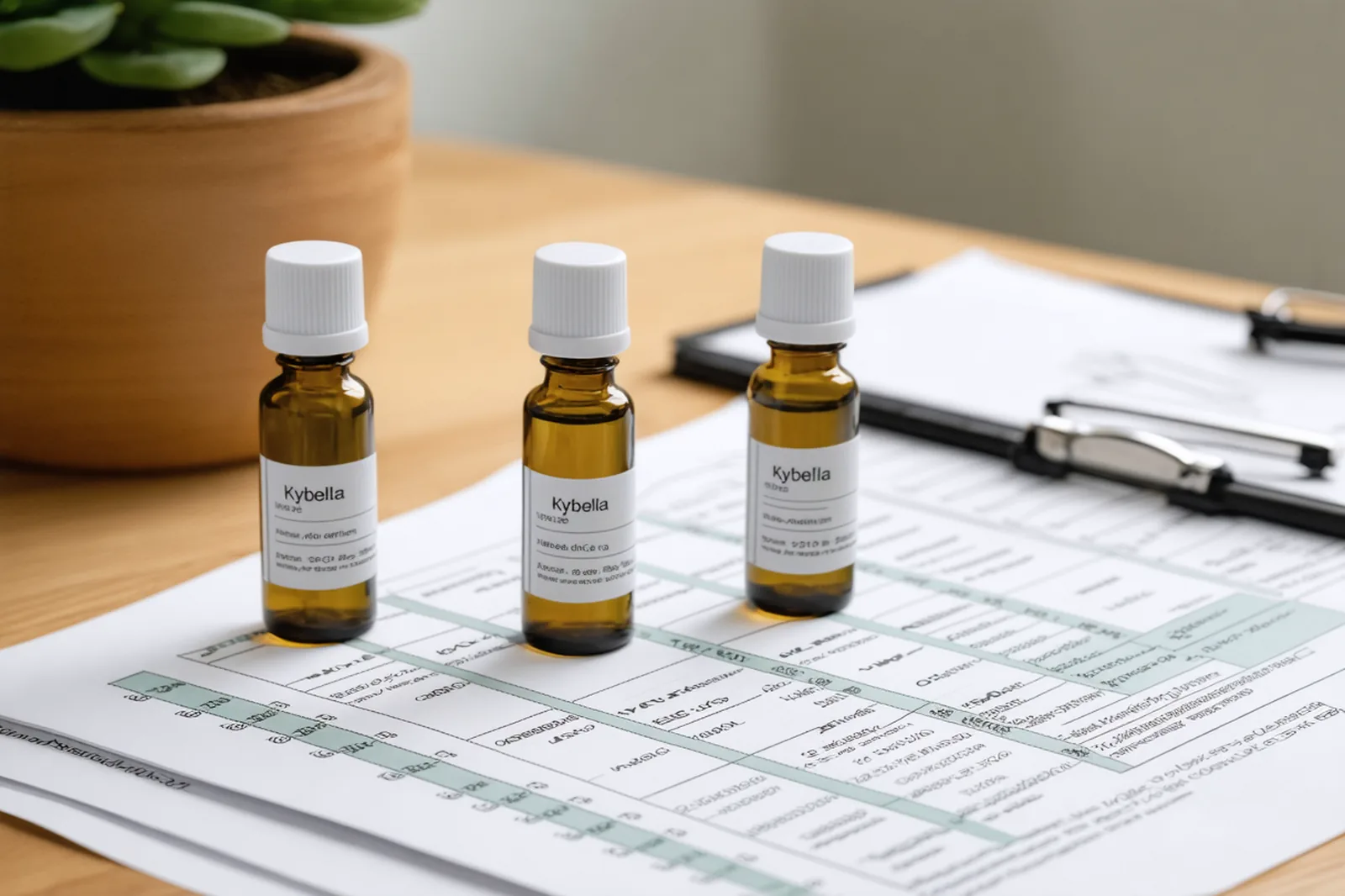
What it is approved for. The label indicates Kybella "for improvement in the appearance of moderate to severe convexity or fullness associated with submental fat in adults."
What it is not approved for. The label's limitations of use state that "the safe and effective use of KYBELLA for the treatment of subcutaneous fat outside the submental region has not been established and is not recommended." Any use outside the submental area is off-label, and the label recommends against it.
What kind of product it is. The label describes Kybella as a cytolytic drug. Because it is a drug, the correct FDA term is "approved." "Cleared" applies to medical devices that go through the 510(k) pathway.
Why it matters for a practice. Advertising Kybella for areas other than under the chin would promote a use its label says is not recommended. Keep consult scripts and ads tied to the approved indication.
How it is dosed. Per the label, Kybella is injected into subcutaneous fat in the submental area at an area-adjusted dose of 2 mg/cm2, as 0.2 mL injections spaced 1 cm apart. A single treatment is up to 50 injections (10 mL total), and up to 6 treatments may be given at intervals of no less than 1 month. The label tells injectors to avoid the marginal mandibular nerve area.
Label warnings to build into consent. The warnings section covers injection site hematoma and bruising, the risk of injecting near vulnerable anatomic structures, injection site alopecia, and injection site ulceration, necrosis and infection. The most common adverse reactions in clinical trials (more than 20% of subjects) were injection site edema or swelling, hematoma, pain, numbness, erythema and induration.
How to verify. Search the product name in Drugs@FDA. An approved drug shows its application number, approval date and current label.
Business information, not medical or legal advice. Verify current status and labeling at FDA.gov before purchasing or treating.