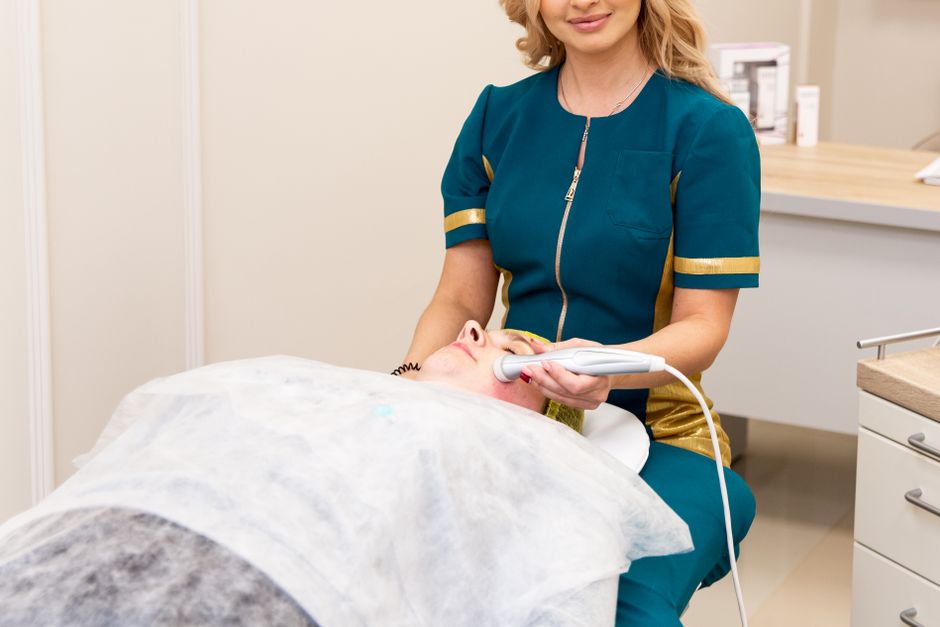
The launch date comes from APR and the Medicube Clinic website, both checked on November 23. The device has been in development for about a year and four months. APR first mentioned a professional lifting device in its earnings announcement in August 2025.
What changed
MAXTRI is an energy-based medical device, or EBD. It uses focused ultrasound to put energy on set points under the skin. Merz's Ultherapy and Classys's Shurink use the same basic technology, so APR is entering a category with two established names.
APR Factory received Ministry of Food and Drug Safety approval in August to make MAXTRI as a Class III medical device. The approved product name is "Focused Ultrasound Stimulation System. That is a Korean approval. The report does not say whether APR has filed with the U.S. FDA or any other regulator, and I found no U.S. status in the document.
Production will run through APR's in-house factory system, the same one built for AGE-R. APR has run its own factory since 2023 and handles planning, R&D and manufacturing there. Early this year it converted its first factory in Gasan-dong, Geumcheon-gu, Seoul, to aesthetic medical devices and set up separate sales and manufacturing teams to supply clinics. AGE-R's cumulative global sales passed 8 million units in August.
Before launch, APR met dermatologists in July and September to get feedback on performance and ease of use.
What it means for practices
Analysis: the device is the sort of purchase a clinic weighs on three things the report names, which are treatment efficacy, safety and cost per treatment. A device in the tens of millions of won comes with a consumables stream after installation. Classys drew 52% of its revenue from devices and 46% from consumables last year, per the report. If MAXTRI follows that model, the money is in the disposables, not the box.
The report also flags what happens after the sale. Medical staff need training and the equipment needs maintenance. APR's own write-up frames its challenge as taking what it learned selling to consumers and applying it to sales and on-site support for clinics. That is a new job for a company whose third-quarter revenue was mostly cosmetics.
The numbers behind the push: consolidated third-quarter 2026 revenue rose 100.3% year over year to KRW 773.1 billion. Cosmetics and beauty products made up KRW 682.3 billion of that, or 88.3%. Beauty devices fell 17.9% to KRW 84.7 billion. So the home-device business that made the brand is shrinking as a share of sales, and the clinic device is an answer to that.
The Samil PwC Management Research Institute forecast that the global EBD market will grow at an average 18% a year through 2034. That is the figure APR is betting on, and it is a forecast, not a measured result.
APR also says it has begun supplying skin boosters to clinics abroad. It held a launch event for local clinics in Chile in October and is working on supply to Japan and the Middle East. South Korea is next for the skin booster. The report does not give a date for that.
What owners can do now
If you already own an ultrasound lifting system, the report gives you no reason to switch yet. Ask for the same things you would ask any vendor. Get efficacy data from independent sources, not only the maker's own. Ask for the per-treatment cost in writing, including tips, cartridges or other consumables. Find out who trains your staff, how fast a technician comes out for service, and what the warranty covers.
Ask whether the device is cleared or approved in the United States, and in your own market. The Korean approval is a Class III clearance in Korea. Do not let a sales rep turn that into a U.S. claim.
Ask for references from dermatologists or clinics who have run the device for at least a few months. APR met dermatologists before launch. Those meetings are useful for APR, but they are not your references.
What we don't know yet
The report does not give MAXTRI's price, its treatment settings, its indications beyond general lifting, or any clinical trial results. It does not name a distributor for Korean clinics or say how many units APR can build by early next year.
It also does not say how MAXTRI will work for overseas clinics or whether APR has filed with the FDA. The company's stock is down. APR closed at KRW 235,500 on November 20, down 50.4% from its September 1 intraday high of KRW 475,000, after third-quarter operating profit of KRW 160.6 billion came in about 10% below market expectations. The report ties part of that miss to a stronger won and foreign-exchange losses on receivables. Whether a clinic device can change that picture within a year is an open question.
Business information, not medical or legal advice. Verify regulatory status at FDA.gov.